

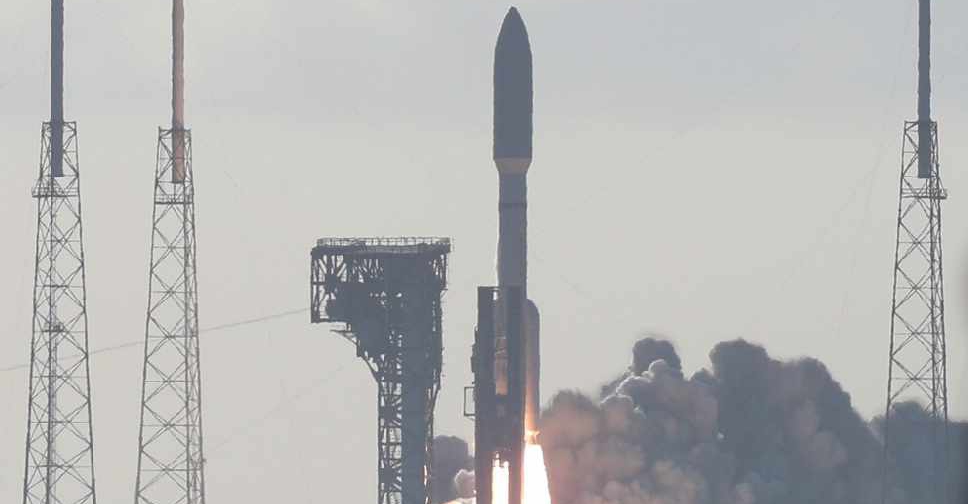
NASA's next-generation Mars rover Perseverance blasted off from Florida's Cape Canaveral on Thursday atop an Atlas 5 rocket on a $2.4 billion mission to search for traces of potential past life.
Perseverance is due to land at the base of an 820-foot-deep crater called Jezero, a former lake from 3.5 billion years ago that scientists suspect could bear evidence of potential past microbial life on Mars.
It is expected to reach Mars next February.
Scientists have long debated whether Mars - once a much more hospitable place than it is today - ever harbored life. Water is considered a key ingredient for life, and the Mars billions of years ago had lots of it on the surface before the planet became a harsh and desolate outpost.
The next-generation robotic rover - a car-sized six-wheeled scientific vehicle - is also scheduled to deploy a mini helicopter on Mars and test out equipment for future human missions to the fourth planet from the sun.
This marked NASA's ninth journey to the Martian surface.
This was scheduled as the third launch from Earth to Mars during a busy month of July, following probes sent by the United Arab Emirates and China.


 Haiti gang raid leaves 47 dead, residents demand stronger protections
 Trump administration plans to revoke visas of foreigners seeking asylum
 US announces expansion of sanctions in 'economic onslaught' on Iran
 UK police arrest 12 after linking crash that killed seven to organised crime
 US removes Syria from terrorism sponsor list