
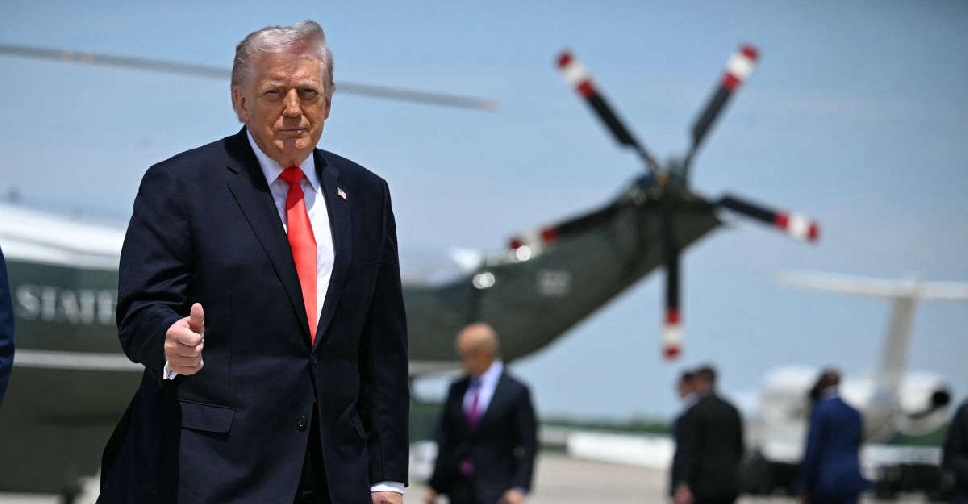
US President Donald Trump said on Friday he would increase tariffs on cars and trucks from the European Union to 25 per cent next week, saying the bloc had not complied with its trade deal with Washington.
"Based on the fact the European Union is not complying with our fully agreed to Trade Deal, next week I will be increasing Tariffs charged to the European Union for Cars and Trucks coming into the United States," he wrote in a social media post.
"It is fully understood and agreed that, if they produce Cars and Trucks in U.S.A. Plants, there will be NO TARIFF."
Trump told reporters at the White House the higher tariff would force European car makers to move their factory production to the US more quickly.
"We have a trade deal with the European Union. They were not adhering to it. So I raised the tariffs on cars and trucks to 25%, that's billions of dollars coming into the United States, and it forces them to move their factory production much faster."
The Trump administration last year imposed a 25 per cent tariff on global automotive imports under a national security trade law, but finalized a deal with the EU in August to lower those duties to a net 15 per cent, inclusive of prior duties.
In exchange, the EU agreed to eliminate duties on US industrial goods, including autos, and accept US safety and emissions standards on vehicles.
Although EU lawmakers advanced legislation in March to implement the tariff reductions, the process is not expected to be completed before June, as EU governments and the European Parliament negotiate final texts.
"President Trump's behaviour is unacceptable," Bernd Lange, the chair of the European Parliament's international trade committee, told Reuters.
"This latest move demonstrates just how unreliable the US side is. We have already witnessed these arbitrary attacks from the US in the case of Greenland; this is no way to treat close partners. Now we can only respond with the utmost clarity and firmness, drawing on the strength of our position," Lange said.
A Trump administration official, asked to explain Trump's move, said: "The EU has not complied with the autos deal after eight months."
Kelly Ann Shaw, a top trade adviser to Trump during his first term who is now a partner with law firm Akin Gump Strauss Hauer & Feld, said she had expected a rupture with the EU for months, given the bloc's slow progress in implementing the trade deal signed in Turnberry, Scotland last summer.
"The US effectively implemented the Turnberry agreement as of August, and we're nearly a year later and we have yet to see the EU cut a single tariff," she said.
Shaw said Trump's action amounted to the first enforcement action against a country or bloc for not implementing trade deals, but there was still time for the EU to act to avert the higher tariff rates. She noted the action was also limited in scope.
"He made it very specific to one type of sector and I think it's to put pressure on the Europeans."
Automakers have privately told Trump they will hold off on making significant shifts in production until they get more clarity on the future of the US-Mexico-Canada trade agreement, which will see a formal review begin in July.
European automakers already have significant operations in the US and some have announced expansions.
In late March, Mercedes-Benz said it would invest $4 billion in its plant in Alabama through 2030, with total investment of $7 billion planned in US operations.
Mercedes-Benz said last year it would shift production of its GLC SUV from Germany to Alabama. In February, it said group operating profit was more than halved to 5.8 billion euros ($6.9 billion) in part due to 1 billion euros in tariff costs.
Ryan Majerus, a former senior US Commerce Department official who is now a partner with law firm King & Spalding, said the president's move may also reflect Trump's frustration that some European countries have balked at supporting the US-Israeli war against Iran and refused to send their navies to help open the Strait of Hormuz, a vital waterway for the global oil market.
"This is not going to sit well in the EU, and I'm not sure the administration cares, because they're so incredibly antagonistic toward the EU," Majerus said.
Tensions between the US and EU escalated this week after Trump threatened to reduce US troop levels in Germany, Italy and Spain.
The US president lashed out after German Chancellor Friedrich Merz said the US was being "humiliated" by Iran in talks to end the conflict in the Middle East.

 Aster to invest in International Modern Hospital under AED1bn UAE expansion plan
 UAE unveils unified tourism identity, grand tour platform
 Etihad CEO says 'First Class' remains main focus, not 'premium economy'
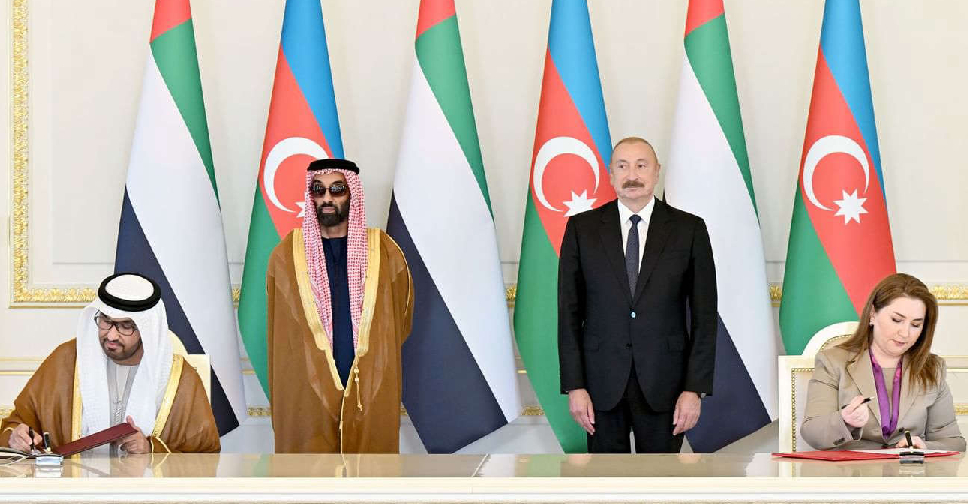 Masdar expands clean energy partnership in Azerbaijan
 UAE tourism ready to bounce 'back stronger', says minister