

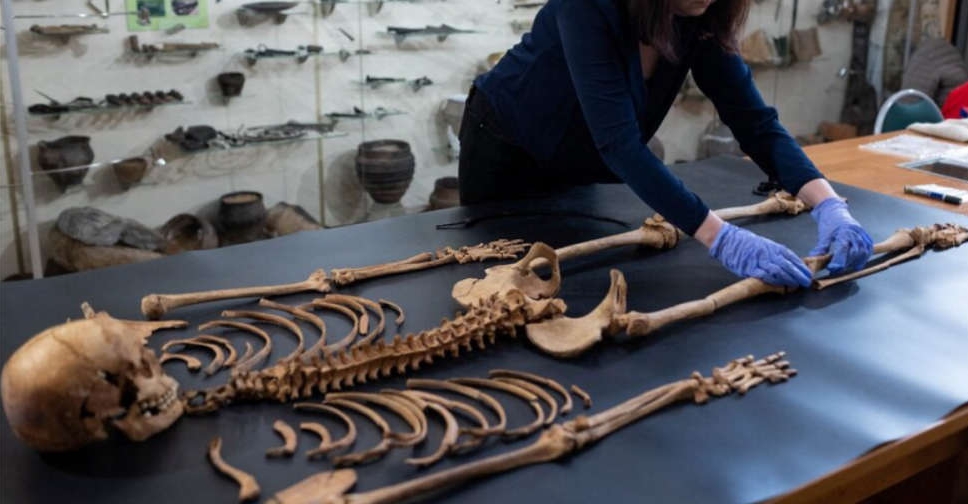
Buried with a padlock on her foot and an iron sickle across her neck, "Zosia" was never supposed to be able to come back from the dead.
Entombed in an unmarked cemetery in Pien, northern Poland, the young woman was one of dozens feared by her neighbours to have been a "vampire".
Now, using DNA, 3D printing and modelling clay, a team of scientists has reconstructed Zosia's 400-year-old face, revealing the human story buried by supernatural beliefs.
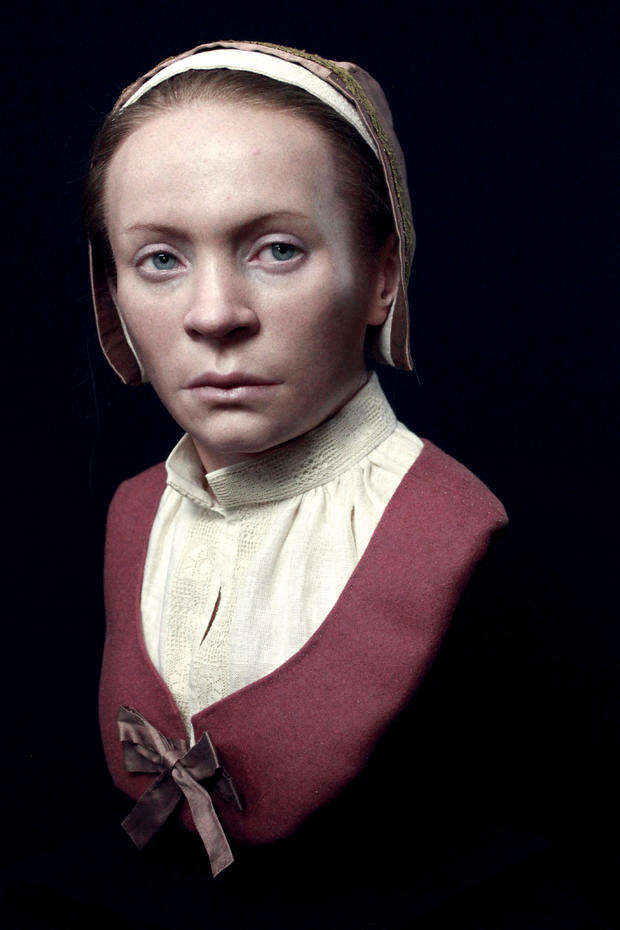
Photo: A 3D reconstruction of Zosia's face, via Oscar Nilsson - Project Pien
"It's really ironic, in a way," said Swedish archaeologist Oscar Nilsson. "These people burying her, they did everything they could in order to prevent her from coming back from the dead... we have done everything we can in order to bring her back to life."
Zosia, as she was named by locals, was found in 2022 by a team of archaeologists from Torun's Nicolaus Copernicus University.
Aged 18-20 when she died, analysis of Zosia's skull suggests she suffered from a health condition which would have caused fainting and severe headaches, as well as possible mental health issues, Nilsson said.

 Can sheep save the glaciers? Swiss scientists put wool to the test
 Scientists make potential breakthrough in search for dark matter
 Ultra-white falcon fetches AED1.5 million at Abu Dhabi auction
 Dolly Parton's legacy lives on through book deliveries to kids
 Robot Olympics ends with humanoid's 8.64-second 100m