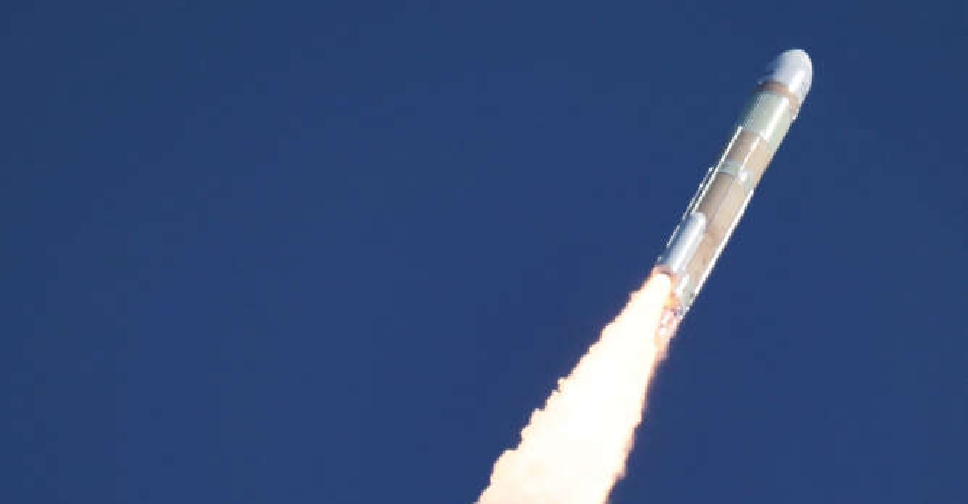
Japan said it had destroyed a new medium-lift rocket it launched into space on Tuesday after the vehicle's second-stage engine failed to ignite, in a blow to its efforts to expand access to space and remain competitive in a launch market roiled by Elon Musk's SpaceX.
The 57-metre tall H3 rocket had lifted off from the Japan Aerospace Exploration Agency's (JAXA) Tanegashima space port, following an aborted launch last month. JAXA said it sent a self-destruct signal to the rocket after the engine failure.
The H3 was carrying the ALOS-3, a disaster management land observation satellite that is also equipped with an experimental infrared sensor designed to detect North Korean ballistic missile launches.
Shares in Mitsubishi Heavy Industries Ltd, the H3's builder, fell 1.8 per cent in morning trade, while the broader Japanese benchmark index was up 0.4 per cent.
Powered by a new simpler, lower-cost engine that includes 3D-printed parts, the H3 is designed to lift government and commercial satellites into Earth orbit.
It also meant to ferry supplies to the International Space Station.
As part of Japan's deepening cooperation with the United States in space, it will eventually carry cargo to the Gateway lunar space station that NASA plans to build as part of its programme to return people to the moon, including Japanese astronauts.
MHI has estimated that the H3's cost per launch will be half of its predecessor, the H-II, helping it win business in a global launch market increasingly dominated by SpaceX's reusable Falcon 9 rocket.
In a report published in September, the Center for Strategic and International Studies put the cost of a Falcon 9 launch to low Earth orbit at $2,600 per kilogramme. The equivalent price tag for the H-II is $10,500.


 Russia, Ukraine agree to Oleshky ceasefire brokered by Melania Trump
 Seven killed in attack at church funeral in Jordan
 Gunman fires from car near Paris, killing 1
 Injuries in Tibet rises to 76 after earthquake, death toll remains at 16
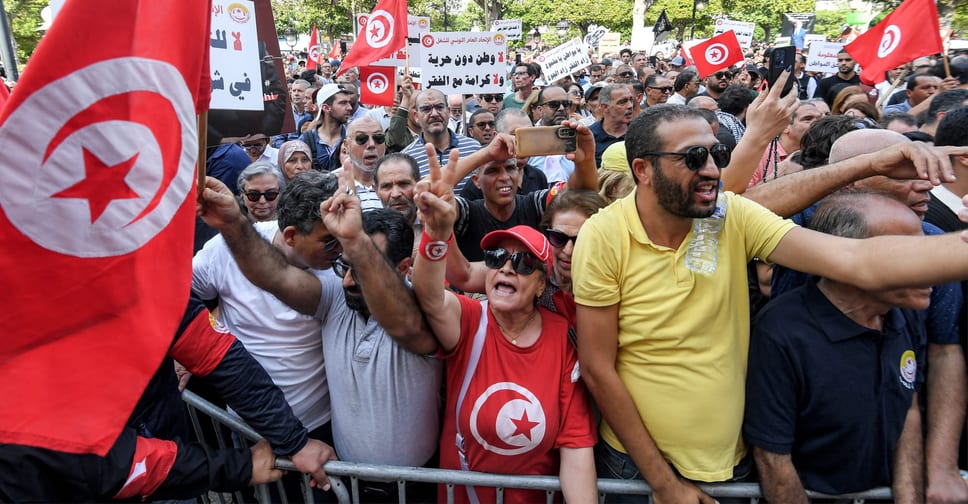 Tunisian police clash with protesters in capital on day of heightened tensions