

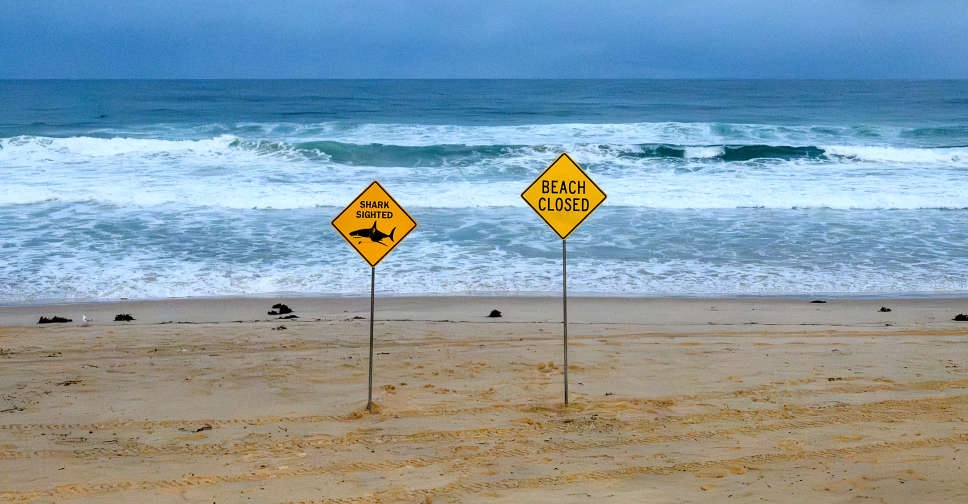
Dozens of beaches along Australia's east coast, including in Sydney, have closed on Tuesday after four shark attacks in two days, as heavy rains left waters murky and more likely to attract the animals.
Beaches around Port Macquarie, around 400 km north of Sydney, were shut after a man was bitten while surfing earlier in the day. He remains in hospital in a stable condition, health authorities said.
"If you're thinking about going for a swim, think of going to a local pool because at this stage, we're advising that beaches are unsafe," Steven Pearce, the chief executive of Surf Life Saving New South Wales (NSW) told reporters on Tuesday.
"We have such poor water quality that's really conducive to some bull shark activity."
The closures come in the middle of the Southern Hemisphere summer, when beaches across Australia are normally packed with locals and tourists.
SHARK ATTACKS
On Monday evening, emergency services were called to a beach in Sydney's Manly after reports a surfer in his 20s had been bitten by a shark. Eyewitness Max White said another surfer had kept the man alive using his board's leg rope as a makeshift tourniquet to stem the bleeding.
"He was breathing, but he was unconscious, and we just ... tried to keep him awake," he told state broadcaster ABC.
Paramedics treated the man for serious leg injuries before taking him to hospital in critical condition.
Also on Monday, a 10-year-old boy escaped unharmed after a shark knocked him off his surfboard and bit a chunk out of it, while a day earlier, another boy was left in critical condition after being bitten at a city beach.
All beaches in the Northern Beaches, a council area straddling Sydney's northern coastline, will remain closed until further notice, police said.
BRACKISH WATER
The shark attacks follow days of heavy rain that washed into the harbour and nearby beaches, creating ideal conditions for the bull sharks suspected to be behind some of the attacks. The species thrives in brackish water.
Sharks do not normally attack humans, but the turbid water reduces their visibility and raises the risk of them bumping into something, at which point "they defensively or curiously bite and then bite again", Chris Pepin-Neff, an academic and expert on shark behaviour, wrote in a column in the Sydney Morning Herald newspaper.
Heavy rain also increases sewage runoff, drawing in bait fish that sharks feed on, he added.
Australia sees around 20 shark attacks per year with fewer than three of those being fatalities, according to data from conservation groups. Those numbers are dwarfed by drownings on the country's beaches.

 Partial resumption of air navigation in Qatar
 Kuwait and Qatar thwart fresh wave of Iranian attacks
 After a week of war, Trump demands Iran's 'unconditional surrender'
 Ex-rapper's party set to sweep Nepal election
 Israeli airforce pounds Beirut, Lebanon death toll rises