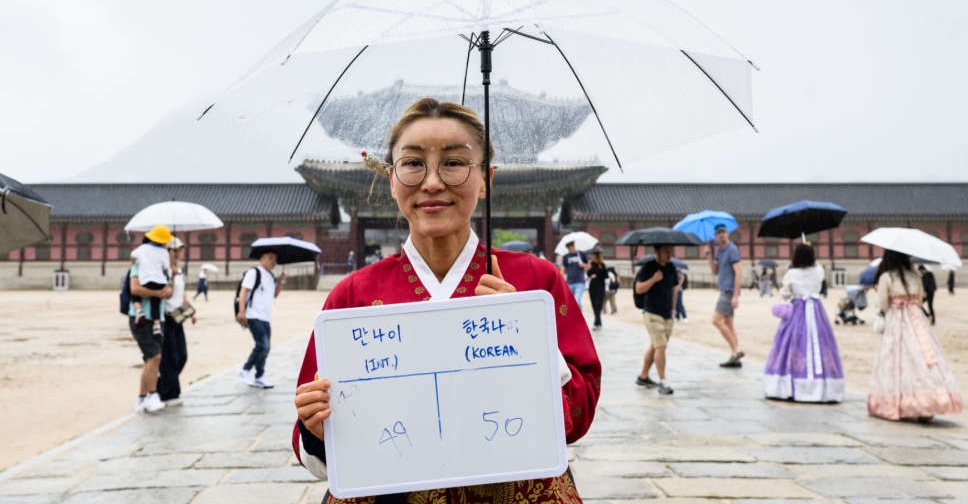
South Koreans became a year or two younger on Wednesday as new laws that require using only the international method of counting age took effect, replacing the country's traditional method.
Under the age system most commonly used in South Koreans' everyday life, people are deemed to be a year old at birth and a year is added every January 1.
The country has since the early 1960s used the international norm of calculating from zero at birth and adding a year on every birthday for medical and legal documents. But many South Koreans continued to use the traditional method for everything else.
In December, South Korea passed laws to scrap the traditional method and fully adopt the international standard.
"We expect legal disputes, complaints and social confusion that have been caused over how to calculate ages will be greatly reduced," Minister of Government Legislation Lee Wan-kyu told a briefing on Monday.
According to a government survey conducted in September 2022, 86 per cent of South Koreans said they would use the international age in their everyday life when the new laws took effect.
"I was about to turn 30 next year (under the traditional Korean age system) but now I have some more time earned and I love it," Choi Hyun-ji, a 27-year-old office worker in Seoul, said.
"It's just great to feel like getting younger," Choi added.
Another age system exists in South Korea for conscription, school entrance and calculating the legal age to smoke or drink: a person's age is calculated from zero at birth and a year is added on January 1. Officials said that method would remain for the time being.


 Abu Dhabi invites public to name two 'giants' at Natural History Museum
 Swarms of moths in Australia lift hopes of recovery for endangered species
 Alaska crowns its 'Fat Bear Week' champion
 NASA says new Roman telescope's lifespan could more than double, to 22 years
 Can sheep save the glaciers? Swiss scientists put wool to the test