
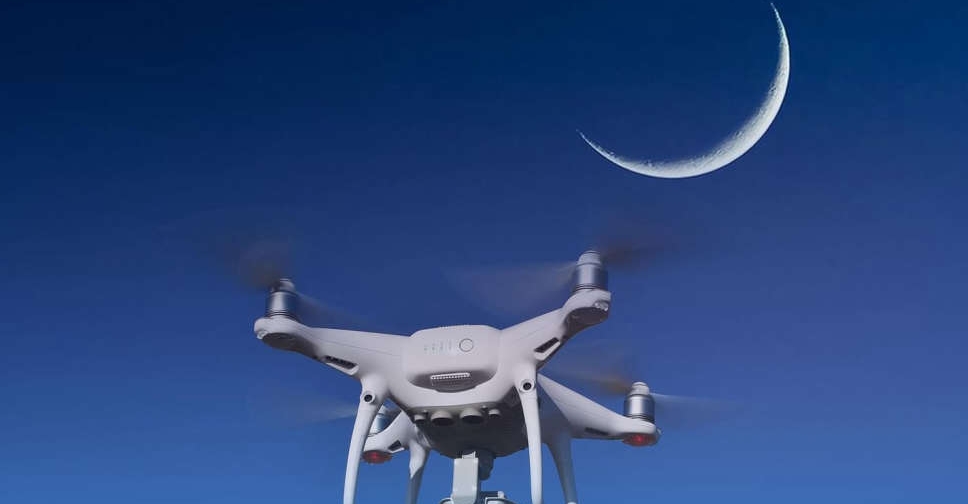
The UAE Council for Fatwa will use several AI-powered drones from the Al-Khatim Astronomical Observatory for the Shawwal moon sighting.
Earlier this year, the UAE used the drones for the crescent moon sighting to mark the beginning of Ramadan, becoming the first in the world to do so.
The drones will be equipped with high-precision lenses that will rise more than 300 metres above ground, directed towardsthe location of the moon based on precise astronomical calculations, national news agency Wam reported.
The council selected the historic Al-Hosn landmark as the location for the committee's meeting, drawing inspiration from its national and cultural significance.
Five advanced national observatories, strategically distributed across the country, have been equipped with the latest smart technologies. The observatories include: Al-Khatim Astronomical Observatory (Marṣad al-Khatim al-Falakī), Jabal Hafeet Observatory (Marṣad Jabal Ḥafīt), Dubai Crescent Observatory (Marṣad Dubayy li-l-Ahilla), Sharjah Astronomical Observatory (Marṣad al-Shāriqa al-Falakī) and Ras Al Khaimah Observatory (Marṣad Rās al-Khaimah). These observatories will ensure the accuracy of the sighting process the highest levels of efficiency in observation.
This approach aims to overcome challenges that may obstruct visual sighting and ensure the atmospheric clarity needed for accurate observation.
Additionally, innovative AI-powered technologies will be used to analyse images, process data, and determine the location of the crescent's birth and the possibility of its visibility with precision.
The AI-backed drones will complement traditional methods of crescent sighting, Wam added.

 UAE Cabinet approves AED 292.5 billion for 2027-2029
 Etihad Airways cancels more flights to Saudi Arabia
 Dubai arrests group over fake Google reviews targeting company
 UAE to train 50 young content creators on water sustainability
 UAE condemns continued Houthi attacks on Riyadh airport