

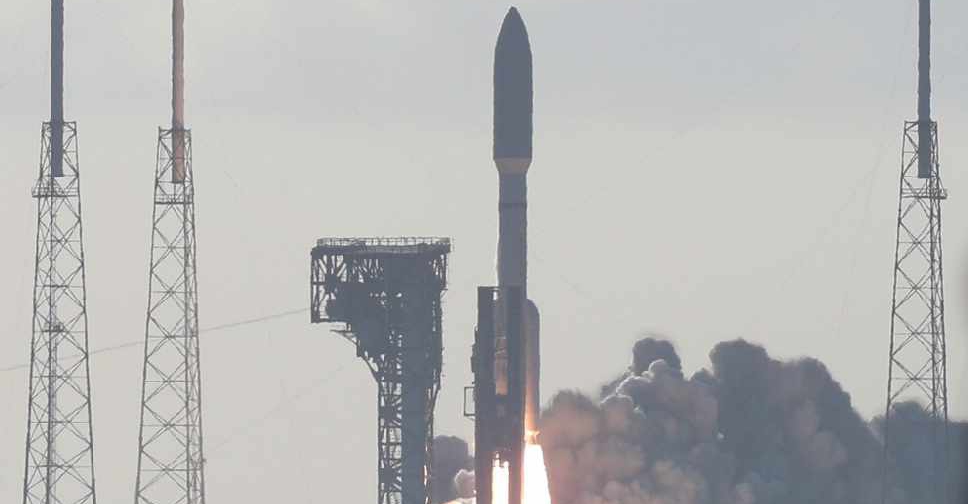
NASA's next-generation Mars rover Perseverance blasted off from Florida's Cape Canaveral on Thursday atop an Atlas 5 rocket on a $2.4 billion mission to search for traces of potential past life.
Perseverance is due to land at the base of an 820-foot-deep crater called Jezero, a former lake from 3.5 billion years ago that scientists suspect could bear evidence of potential past microbial life on Mars.
It is expected to reach Mars next February.
Scientists have long debated whether Mars - once a much more hospitable place than it is today - ever harbored life. Water is considered a key ingredient for life, and the Mars billions of years ago had lots of it on the surface before the planet became a harsh and desolate outpost.
The next-generation robotic rover - a car-sized six-wheeled scientific vehicle - is also scheduled to deploy a mini helicopter on Mars and test out equipment for future human missions to the fourth planet from the sun.
This marked NASA's ninth journey to the Martian surface.
This was scheduled as the third launch from Earth to Mars during a busy month of July, following probes sent by the United Arab Emirates and China.


 WHO says Congo Ebola outbreak spreads to two new health zones
 Congo military plane crash kills 13
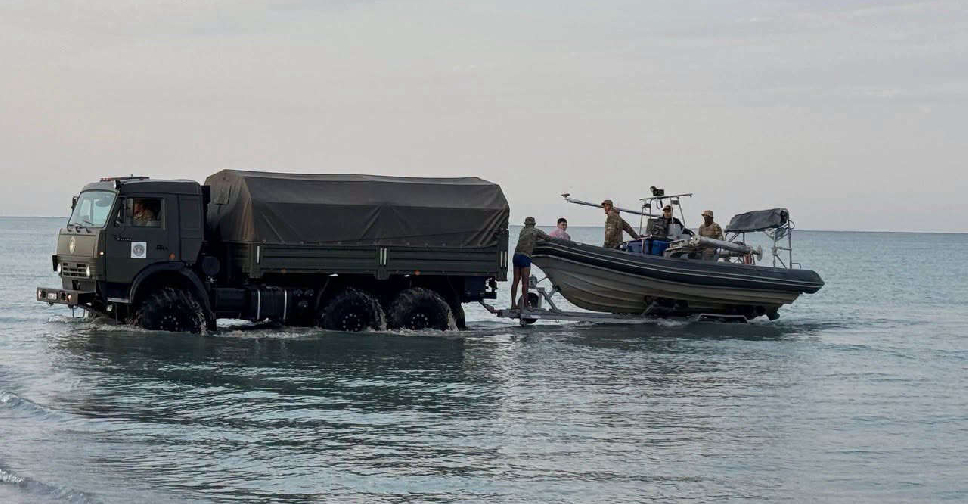 Kazakhstan detains defence officials after 14 die during naval exercise
 Trump, Xi wrap up summit with tea and tour of US archives
 Five missing after explosion collapses building in Athens