
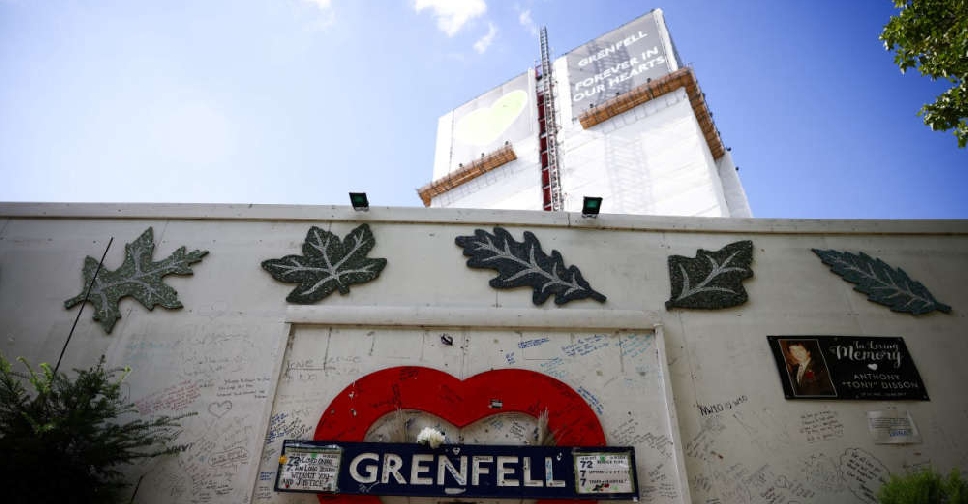
A public inquiry into the 2017 London Grenfell Tower blaze blamed the disaster on failings by the government, construction industry and, most of all, the firms involved in fitting the exterior with flammable cladding.
Seventy-two people died when the fire ripped through the 23-storey social housing block in one of the richest areas of west London during the early hours of June 14, 2017. It was Britain's deadliest blaze in a residential building since World War Two.
"The simple truth is that the deaths that occurred were all avoidable," said inquiry chair Martin Moore-Bick.
In its long-awaited final report, the inquiry laid most responsibility for the disaster on the companies involved in the maintenance and refit of the apartment tower, failings by local and national authorities as well as companies which had dishonestly marketed combustible cladding materials as safe.
There was also widespread criticism and blame levelled at the then-government, local authority of Kensington and Chelsea, the industry, regulatory groups, specific individuals and an ill-prepared fire brigade for years of inaction over fire safety in high-rise blocks.
"Not all of them bear the same degree of responsibility for the eventual disaster, but as our reports show, all contributed to it in one way or another, in most cases, through incompetence, but in some cases, through dishonesty and greed," Moore-Bick said.
The inquiry report, which ran to almost 1,700 pages, said the blaze was the culmination of "decades of failure".
While British police have said 58 people and 19 firms and organisations are under investigation, prosecutions - including for corporate manslaughter and fraud - remain years away because of the complexity and need to consider the inquiry's report.
Prime Minister Keir Starmer said the government would carefully consider the inquiry's findings to ensure there was no repeat of the disaster.
An earlier report by the inquiry team in 2019, which focused on the events of the night, found an electrical fault in a refrigerator in a fourth floor apartment started the fire.
Flames then spread uncontrollably, mainly because the tower had been covered during a 2016 refurbishment with cladding - exterior panels designed to improve appearance and add insulation - made of flammable aluminium composite material that acted as a source of fuel.

 Thai teen kills 7 in rampage at home and school before shooting himself
 US appeals court blocks Trump’s $400 million White House ballroom project
 Spain dismantles one of Mediterranean's largest human smuggling networks
 Syria says bomb on minibus near Damascus wounded 14, deaths reported mistakenly
 Spain hopes to transfer migrant minors to mainland within weeks