
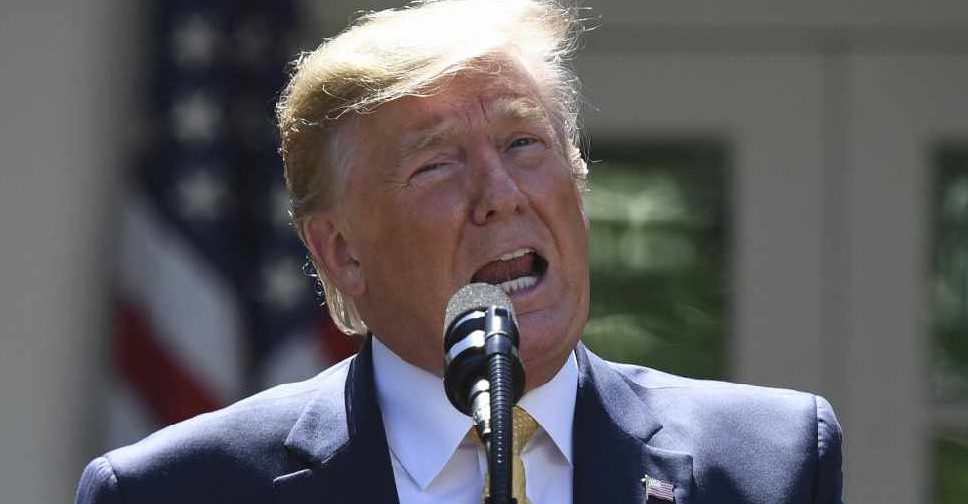
US President Donald Trump and Iran threatened to escalate their war by attacking energy and desalination facilities in the Gulf, a potential widening of hostilities that could deepen a regional crisis and add to concerns in global markets.
Air raid sirens sounded across Israel from the early hours of Sunday morning, warning of incoming missiles from Iran, after scores of people were hurt overnight in two separate attacks in the southern Israeli towns of Arad and Dimona.
The Israeli military said hours later that it was striking Tehran in response.
The risks of worsening regional conflict, highlighted by an initial Iranian threat to hit water-scarce Gulf states' desalination plants, are especially acute for the desert countries whose populations and economies depend on the water-making facilities.
While some, such as Saudi Arabia, Oman and the UAE, can draw on more than one sea, others, including Qatar, Bahrain and Kuwait, sit crowded along the shoreline of the Gulf with no alternative coastline, leaving critical desalination plants exposed to any escalation targeting energy and infrastructure.
Trump on Saturday threatened to "obliterate" Iran's power plants if Tehran did not fully reopen the Strait of Hormuz within 48 hours, suggesting a significant escalation barely a day after he talked about "winding down" the war, now in its fourth week.
Iran said on Sunday it would attack US infrastructure as well as energy and desalination facilities in the Gulf if Trump carried out his threat, which he made as US Marines and heavy landing craft continued to head to the region.
However, threats towards desalination plants have seemingly been retracted, instead the Revolutionary Guards produced another statement that said it would aim for Israel's electricity sector as well as power plants supplying U.S. bases with electricity in regional countries.
"The lying ... U.S. President has claimed that the Revolutionary Guards intends to attack the water desalination plants and cause hardship to the people of the countries in the region," the statement shared on state media said.
"We are determined to respond to any threat at the same level as it creates in terms of deterrence ... If you hit electricity, we hit electricity."
More than 2,000 people have been killed during the war the US and Israel launched on February 28, which has upended markets, spiked fuel costs, fuelled global inflation fears and convulsed the postwar Western alliance.
The Strait of Hormuz remains open to all shipping except vessels linked to "Iran's enemies", the country's representative to the International Maritime Organisation was quoted as saying in Iranian media reports published on Sunday.

 Three killed in Russian strikes in Kyiv region, official says
 Typhoon Dolphin hits Japan's Okinawa, China shuts ports ahead of landfall
 Spain to establish border controls against Italy amid migration dispute
 Thai teen kills 7 in rampage at home and school before shooting himself
 US appeals court blocks Trump’s $400 million White House ballroom project