
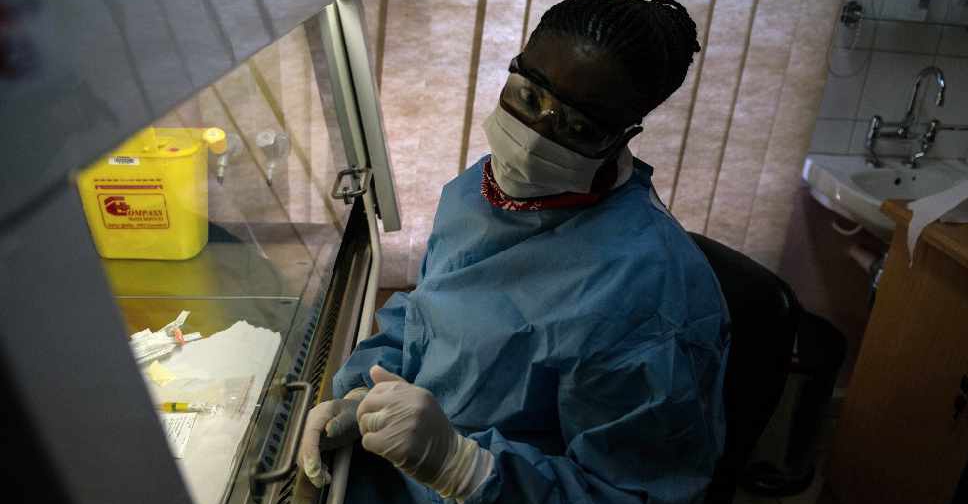
South Africa will put on hold use of AstraZeneca's COVID-19 shot in its vaccination drive, after data showed it gave minimal protection against infection caused by the country's dominant coronavirus variant.
Health Minister Zweli Mkhize said on Sunday that the government would await advice from scientists on how best to proceed, after a trial showed the AstraZeneca vaccine did not significantly reduce the risk of mild or moderate COVID-19 from the 501Y.V2 variant that caused a second wave of infections starting late last year.
Prior to widespread circulation of the more contagious variant, the vaccine was showing efficacy of around 75 per cent, researchers said.
In a later analysis based mostly on infections by the new variant, there was only a 22 per cent lower risk of developing mild-to-moderate COVID-19 versus those given a placebo. Although researchers said the figure was not statistically significant, due to trial design, it is well below the benchmark of at least 50 per cent regulators have set for vaccines to be considered effective against the virus.
The study did not assess whether the vaccine helped prevent severe COVID-19 because it involved mostly relatively young adults not considered to be at high risk for serious illness.
AstraZeneca said on Saturday that it believed its vaccine could protect against severe disease and that it had already started adapting it against the 501Y.V2 variant.
Still, professor Shabir Madhi, lead investigator on the AstraZeneca trial in South Africa, said data on the vaccine were a reality check and that it was time to "recalibrate our expectations of COVID-19 vaccines".
South Africa hopes to vaccinate 40 million people, or two-thirds of the population, to achieve some level of herd immunity but has yet to administer a single shot.
It had hoped to roll out the AstraZeneca vaccine to healthcare workers soon after on Monday receiving 1 million doses produced by the Serum Institute of India (SII).
Instead, it will offer health workers vaccines developed by Johnson & Johnson and Pfizer/BioNTech in the coming weeks.
"What does that mean for our vaccination programme which we said will start in February? The answer is it will proceed," Mkhize told an online news briefing. "From next week for the next four weeks we expect that there will be J&J vaccines, there will be Pfizer vaccines."


 US and Iran inch towards short-term deal to end fighting
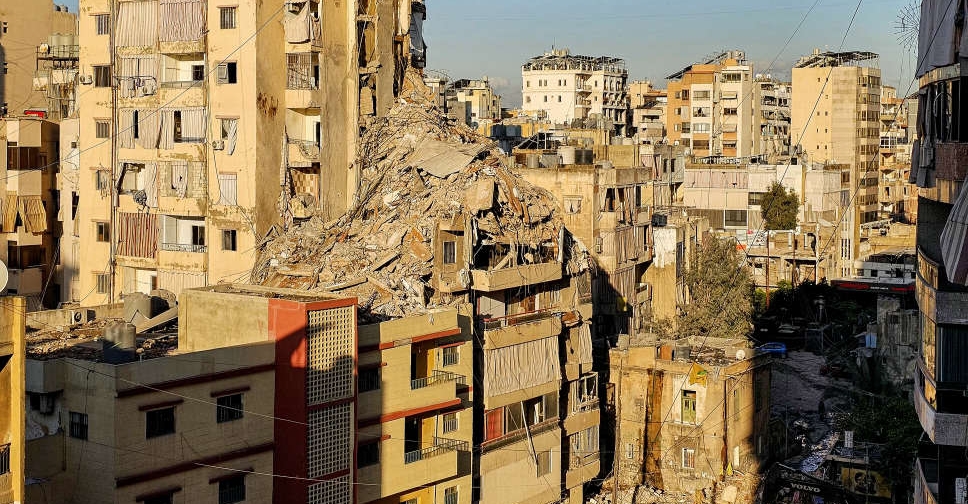 Israel says it killed Hezbollah commander in first strike on Beirut since ceasefire
 Countries scramble to track passengers of virus-hit cruise ship
 Israeli strikes kill five, injure son of Hamas chief in Gaza
 Israel strikes Beirut for first time since ceasefire