

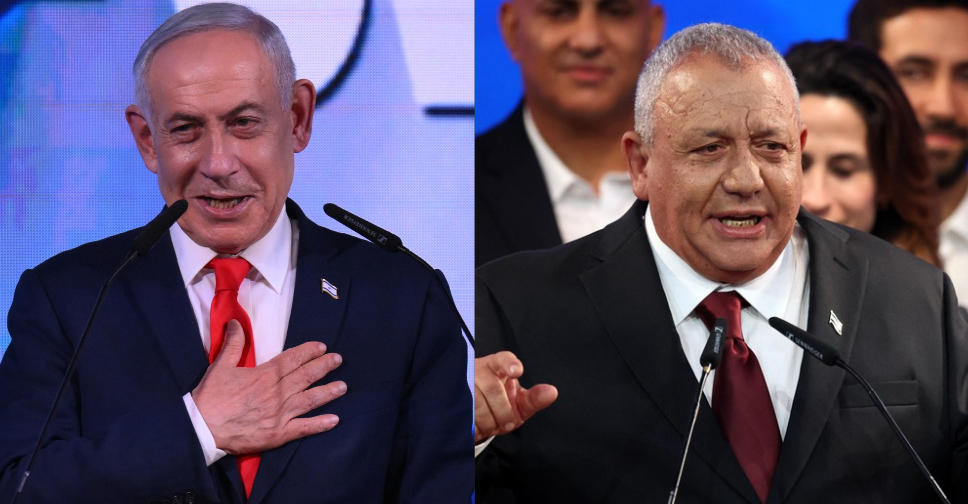
Israel's wartime election appeared deadlocked on Tuesday, exit polls showed, with Gadi Eisenkot's opposition bloc running neck and neck with Prime Minister Benjamin Netanyahu's camp, leaving neither side with a clear path to power.
The projections pointed to a setback for Netanyahu's coalition and potentially weeks of political wrangling to form a government, though the deadlock could allow Israel's longest-serving prime minister to remain in power as caretaker during coalition negotiations.
Netanyahu, Israel's longest-serving leader with 19 years in office, is an unmatched political survivor, and his nationalist politics are increasingly entrenched.
Meanwhile Gadi Eisenkot, a military ex-chief of staff and security hawk, aims to unseat him with the support of parties on the right and centre, as well as the rump of an increasingly marginalised left.
"We must establish a strong, right-wing government," Netanyahu told Likud party supporters after 3 am (0100 GMT) during a speech in Jerusalem, highlighting Israel's military successes and what he described as a historic opportunity to "remove the Iranian threat".
With actual votes trickling in, Kan 11 and Channel 13 exit polls had the blocs tied at 51-51, while Channel 12 gave Netanyahu's Likud-led bloc a narrow 52-49 edge. None left either side with the 61 seats needed for a majority in the 120-seat Knesset.
"The Israeli public has voted against Netanyahu's service as Israel's prime minister ... a worthy leader would have accepted the people's non-confidence and announced today his retirement from politics," Eisenkot earlier told cheering supporters in Tel Aviv.
Far-right religious parties led by Itamar Ben-Gvir and Bezalel Smotrich were projected to take a combined 13 seats within Netanyahu's bloc.
Arab parties outside the two main blocs could hold the balance of power. But Eisenkot, leader of the Yashar party and a former military chief, has all but ruled out forming a government with them, complicating his path to power.
Voter turnout was 77.7 per cent, Israel's Central Elections Committee said, the highest in more than two decades and around 7 percentage points higher than in 2022.
Final results could take days, and Israel's fragmented political system leaves smaller parties potential kingmakers in coalition negotiations that have run to weeks or months after past elections.
If neither bloc can form a government, another vote may be needed, something Eisenkot opposed.
"In an election with such a high turnout it would be a mistake to go to another election," he said.
Tuesday's vote was the first election since the Hamas-led attack of October 7, 2023, and the ensuing wars in Gaza, Lebanon and Iran.
Yohanan Plesner, president of the Israel Democracy Institute, called the exit polls a major defeat for Netanyahu's coalition but cautioned that Eisenkot had not emerged as a clear winner and much could change as votes were counted.

 Syria says main border crossing with Jordan to resume operations on Wednesday
 Cyclone Arnab stalls close to India's east coast
 US-brokered ceasefire starts in Ukrainian town facing starvation
 Jordan says it killed more than 20 IS militants in airstrikes on Syria
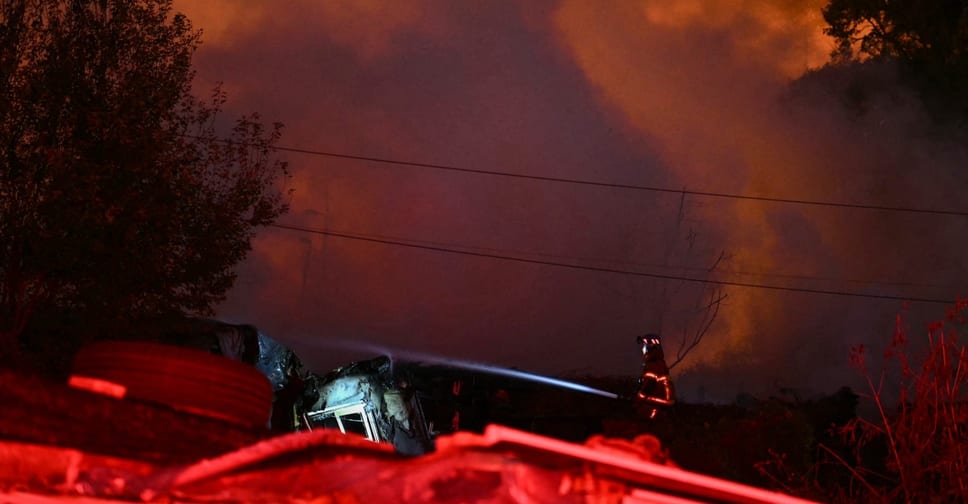 Fire breaks out in shantytown in Seoul's Gangnam district