
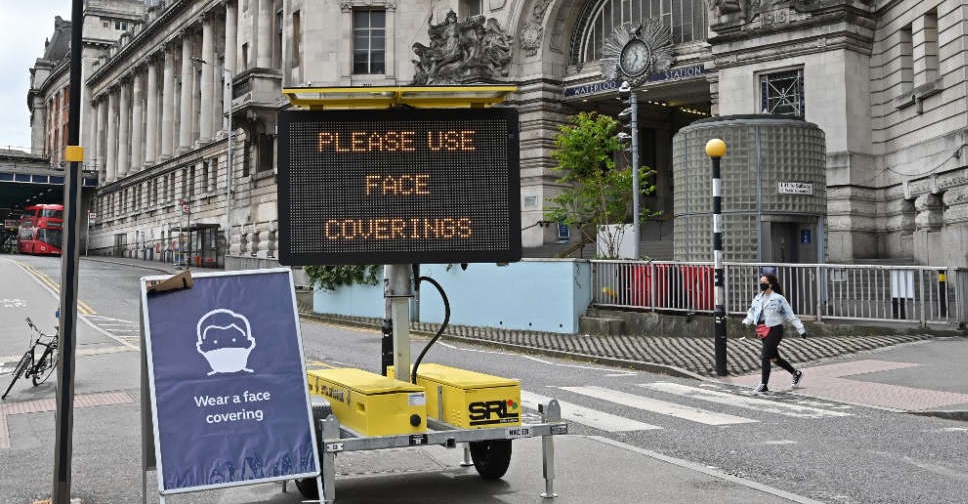
The COVID-19 self-isolation period will be reduced to seven days from 10 days for people in England who get a negative result on a lateral flow test two days in a row.
The British government said the decision will come into effect from Wednesday.
With the Omicron variant spreading rapidly in Britain and record levels of cases over the past week many industries are struggling with staff shortages, including hospitals who have warned of the risk of an impact on patient safety.
The UK Health Security Agency (UKHSA) said its analysis suggested a seven-day isolation period alongside two negative lateral flow test results had nearly the same protective effect as a 10-day isolation period without testing.
"We want to reduce the disruption from COVID-19 to people’s everyday lives," health secretary Sajid Javid said in a statement.
Rapid lateral flow tests, which are provided free by Britain's National Health Service, can be self-administered by people at home and give a result in 15 to 30 minutes.
Those who receive a negative lateral flow result on day six and day seven of their self-isolation period, with tests taken 24 hours apart, will no longer have to isolate for 10 days, the government said.
The UKHSA said it "strongly advised" those who leave their self-isolation after seven days to limit contact with others in crowded or poorly ventilated spaces, work from home and minimise contact with those most vulnerable to COVID-19.
"The new approach reflects latest evidence on how long cases transmit the virus for, and supports essential public services and supply chains over the winter, while still limiting the spread of the virus," the UKHSA said.


 Afghanistan school blast kills 7 students, injures up to 99
 Indian police disperse protest outside Meta offices with water cannon
 Ruling party makes gains in Taiwan local elections watched by China
 Israeli strike killed two staff outside Gaza clinic, MSF says
 India's bottled-water crackdown widens as new Bisleri sample found with bacteria