

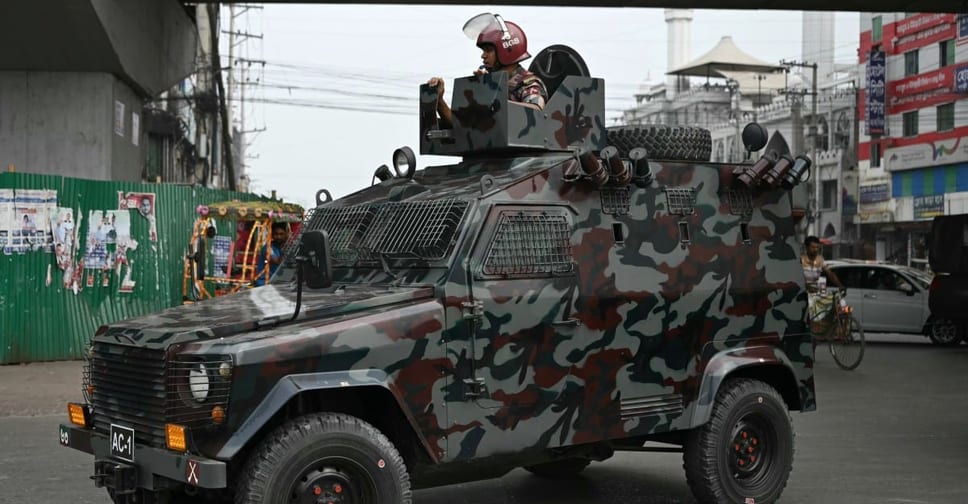
Bangladesh's newly formed wage board agreed on Wednesday to implement a revised pay structure for garment workers from December, as protests over wages entered their fifth day and disrupted production in the country's key apparel sector.
The board did not discuss the size of any wage increase and will hold further meetings to determine the new pay structure, Babul Akter, the workers' representative on the board, said after its first meeting.
"The new wage structure will be implemented from December, and workers will receive their first salaries under the revised pay scale in January," Akter said.
The six-member board was formed this week amid growing labour unrest and includes representatives of workers and factory owners. It is responsible for reviewing pay in Bangladesh's garment industry.
Workers are demanding the monthly minimum wage be raised to 30,000 taka ($242) from 12,500 taka, saying rising food, housing and transport costs have eroded their purchasing power.
DELIVERY RISKS MOUNT
Clashes broke out on Wednesday between workers and police in Savar and Gazipur, two major garment manufacturing hubs on the outskirts of Dhaka. Protesters blocked roads and highways, while police used tear gas and sound grenades. Several factories suspended operations amid fears of further unrest.
Hundreds of garment factories have shut this week during a crucial production period for spring and summer export orders, raising concerns about shipment delays in Bangladesh, the world's second-largest garment exporter after China.
The sector employs about 4 million workers, generates more than 80 per cent of Bangladesh's export earnings and supplies brands including H&M, Inditex's Zara and Walmart.
"Every month is a struggle," said Bithi Begum, a garment worker. "After working hard all day, the money we earn is hardly enough to cover even our basic needs."
International retailers are closely monitoring the situation as factories enter a key production period for spring and summer orders.
H&M told Reuters some factories had temporarily closed, although it had not experienced major supply-chain disruptions.
NEED TO IMPROVE PRODUCTIVITY
Manufacturers said the industry was already under pressure from rising costs, stronger regional competition, uncertainty in energy markets linked to conflict in the Middle East and weaker demand in key export markets.
Economists said the wage board faces the challenge of balancing workers' demands with the competitiveness of an industry that is central to Bangladesh's economy.
Selim Raihan, an economics professor at the University of Dhaka, said Bangladesh could absorb a significant wage increase without necessarily losing its competitive edge if factories improved productivity.
Any wage revision should reflect inflation, living costs and factories' ability to pay, he said, adding that international retailers should support higher labour standards through fairer purchasing practices and prices.
Raihan said prolonged labour unrest could pose a greater threat to the industry than higher wages because it undermines delivery reliability and buyer confidence.
"Treating cheap labour as the industry's permanent competitive strategy would be a mistake," he said. "Bangladesh needs to move increasingly toward productivity, reliability, upgrading and higher-value products."

 Democrats seize Congress in sweeping midterm repudiation of Trump
 Trump acknowledges Iran role in Democratic sweep
 Spain's Sanchez reshuffles cabinet after transport minister quits over train crashes
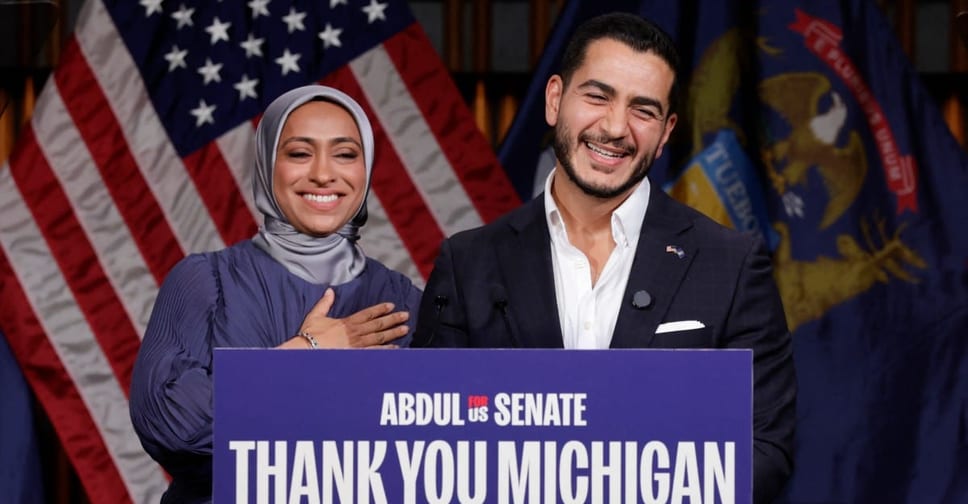 Abdul El-Sayed becomes first Muslim elected to US Senate
 Spain's transport minister resigns over deadly train crash